Bonus Mom SVG: A Designer’s Embroidery Review
When I first opened the Bonus Mom SVG, I immediately pictured the finished piece on a soft, cream-colored sweatshirt. The phrase has a warmth that isn’t just about the words—it’s the kind of sentiment that feels personal, almost like a quiet thank-you. As a designer who spends more time testing graphics than actually using them, I’ve learned to trust that gut reaction. The layout, the lettering weight, the overall balance of the design—these are the things that tell me right away whether a file will translate into thread or just sit on my hard drive. This one felt like it belonged on fabric.
I downloaded the ZIP folder and extracted the usual bundle: SVG, DXF, EPS, and a clean PNG with a transparent background at 300 dpi. For embroidery work, the SVG is the star of the show. But I always appreciate having the PNG on hand for quick mockups before I invest any time digitizing. The transparent background means I can drop it onto a product photo, experiment with placement, and send a preview to a client without firing up my embroidery software. That alone saves me a solid hour of back-and-forth. The DXF and EPS formats are less critical for me, but I know they come in handy for crafters who also do vinyl cutting or print work. It’s a thoughtful, practical set of file types for a crafts graphics library.
The Emotional Pull of the Design
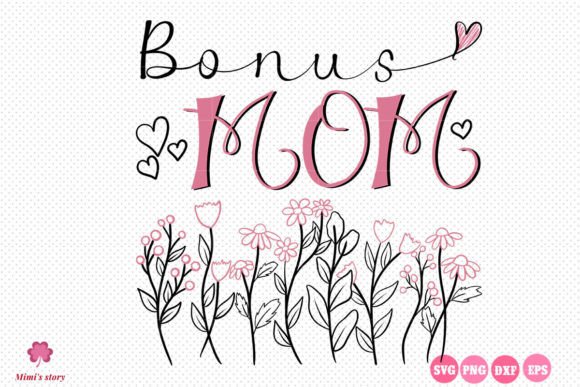
There’s a reason “Bonus Mom” shows up in so many handmade product listings. The phrase is inclusive, modern, and loaded with affection. It’s not a replacement title; it’s an added layer. That emotional context matters when you’re selling custom apparel or personalized gifts. It makes the design an easy conversation starter at craft fairs and a strong seller on Etsy. The Bonus Mom SVG I reviewed had a clean, slightly playful script, paired with a small decorative heart accent. The lines were smooth, the curves flowed naturally, and the stroke width felt consistent. That’s gold for a digitizer. Uneven or overly thin strokes can turn into a nightmare when you map satin stitch, but this design looked like it had been drawn with purpose. The mood is gentle, casual, and heartfelt—exactly the vibe you want on a baby onesie, a kitchen towel, or a tote bag that’s going to be used every day.
How This Translates onto Fabric and Thread
I ran a test digitizing from the SVG file in my software. The paths were clean, with no stray nodes or broken curves. That’s not always the case with free or cheap SVGs, so I took note. The lettering lent itself beautifully to a 0.16-inch satin stitch, and the small heart worked well as a fill stitch with a narrow satin border. I sized the design to 4.5 inches wide, which comfortably fit a 5x7 hoop. That’s a sweet spot for sweatshirt embroidery, tote bag design, and even the back of a baby jacket. Anything smaller than 3.5 inches wide, and I’d start worrying about the thinner parts of the script closing up. The stitching clarity held up nicely on a medium-weight cotton test piece, and the design looked just as crisp on a light gray fabric as it did on white. With a dark fabric, I’d definitely up the stitch density slightly and choose a thread with a bit of sheen to make the text pop. A matte polyester on a black sweatshirt, for instance, might need more contrast than a shiny rayon.
Projects That Feel Like a Natural Fit
I mentally walked through the kinds of items I’d create with this design. The first was a custom tote bag—a simple, unbleached canvas with the Bonus Mom SVG stitched in a dusty rose thread. The message is understated but meaningful, perfect for a daily carry bag. Then I thought about a soft, heather gray pullover with the design placed left-chest, just under 3.5 inches wide. That size would still read clearly, but I’d run a test on a scrap of the same fleece first to make sure the texture didn’t swallow the finer lines. An embroidered patch came next: the design stitched on a sturdy twill background with a merrowed edge, ready to be ironed onto a denim jacket or a canvas apron. The Bonus Mom phrase works beautifully for holiday embroidery, too—imagine it on a Christmas-themed kitchen towel or a Mother’s Day gift set. It’s equally at home in baby embroidery, especially on a soft cotton onesie or a nursery pillow cover. The versatility surprised me. It’s not just a one-note design; it adapts well to different products and markets.
When Small Details Matter: Stitching Challenges
Even with a clean SVG, you have to stay realistic about stitch density and fabric behavior. The heart accent on the design I tested was small—about 0.4 inches tall. On a 4x4 hoop, that’s fine. But if I were to shrink the whole design to 2.5 inches for a hat or a baby bib, that heart could become a problem. Tiny fill stitches can bunch up on textured fabric or turn into a dense blob if the underlay isn’t right. I’d recommend anyone using the Bonus Mom SVG for small hoop sizes to consider simplifying the heart or turning it into a single satin stitch column. The same goes for any thin connecting lines. Test on a scrap of the exact fabric you’ll use, and don’t skip the stabilizer. A cutaway stabilizer is my go-to for sweatshirt embroidery, while a tear-away works well on woven cotton tea towels. Stretchy fabrics like jersey or rib knit demand extra care. I also recommend checking the design in black and white before you commit to thread colors. Sometimes a hue that looks perfect on screen loses its contrast when you remove the color. A quick mockup in grayscale can save you from a washed-out finished product. And if you’re stitching on a curved surface like a cap, remember that the text might distort slightly. I’d experiment with the arch and make sure the lettering doesn’t look pinched at the seams.
From SVG to Perfect Stitch-Out: A Designer’s Checklist
Every time I bring a new SVG into my embroidery workflow, I follow a mental checklist. It’s not complicated, but it prevents the little mistakes that can ruin a handmade product. First, I confirm the hoop size I need and make sure the design fits with at least a half-inch margin from the edges. Then I test the digitized file on a similar fabric scrap, checking for thread breaks, puckering, and stitch density. I look at the design under different lighting and from a distance—the way a customer would see it on a shelf. I also check the back of the hoop. A clean back with no looping threads tells me the tension is right. For the Bonus Mom SVG, I’d also print a paper template of the design and pin it to the garment to check placement. A design that looks centered on a screen might be too high or too low on a real body. Stitch clarity isn’t just about the digitizing; it’s about how the design sits on the final product. If the phrase is meant to be read across the chest, I’ll make sure the words don’t get lost in the curve of the shoulder. All these small steps add up to a professionally finished embroidery project.
What the Bonus Mom SVG Brings to a Craft Business
As a creative entrepreneur, I’m always thinking about customer perception. A design like this raises the perceived value of a handmade product without adding much to the cost. The phrase is instantly recognizable, and it carries a personal touch that mass-produced items can’t match. When you list a sweatshirt with the Bonus Mom embroidery on Etsy, you’re not just selling a garment; you’re selling a feeling. That emotional connection leads to repeat customers and word-of-mouth referrals. The design also works well in bundled listings—think a set of kitchen towels with different family titles, or a collection of baby onesies for a blended family. The Bonus Mom SVG fits right into a line of boutique products that celebrate nontraditional family bonds. I’ve found that designs with a clear, heartfelt message like this one tend to get more engagement in social media mockups. The PNG with transparent background is a perfect design asset for creating those quick, photo-realistic previews. You can drop it onto a mockup of a tote bag, a pillow, or a cap, and post it in your shop before you’ve even threaded a needle. That kind of agility is essential for a small shop owner.
Licensing and Commercial Use: What You Need to Know
I won’t pretend to know the exact license terms for this specific Bonus Mom SVG file—those details aren’t in the included ZIP, and they vary widely across sellers. What I can tell you is that it’s your responsibility to check before you sell anything. If the designer allows commercial use of finished physical products, you’re in the clear to embroider and sell sweatshirts, tote bags, patches, and more. If the license is limited to personal projects, you’ll need to keep those items for gifts or personal use. Never assume. I always keep a folder of licenses for every design asset I use in my craft business. It protects me and builds trust with the original artists. The fact that the Bonus Mom SVG comes with multiple file formats suggests it’s intended for versatile use, but that doesn’t automatically grant commercial embroidery rights. Take five minutes to read the fine print or contact the seller. It’s a small step that can save a lot of headache down the road.
My Honest Take After Using It
After digitizing, testing, and stitching the Bonus Mom SVG, I’m confident it’s a solid addition to any embroidery designer’s library. The emotional weight of the phrase, the clean vector paths, and the flexibility across product types make it a design I’d reach for again—especially for custom apparel and personalized gift orders. The included PNG is a practical bonus, and the SVG digitized without the usual cleanup headaches. I’d recommend it for intermediate digitizers who are comfortable adjusting stitch angles and density, but even a beginner could learn a lot from working with a file this well-structured. Just remember to respect the size limits, test on your actual fabric, and always, always verify the license before you turn a beautiful stitch-out into a sale. When you treat a design like a thoughtful craft, the finished product speaks for itself. The Bonus Mom SVG gives you a head start on that conversation.