A Real-World Review of the Gnome Mom SVG Design
Let’s talk about this Gnome Mom SVG Design from the perspective of someone who actually stitches things for clients and runs a small craft business. When you’re evaluating a design for real use—whether for a custom sweatshirt, a boutique tote bag, or a personalized baby blanket—you’re not just looking at a pretty graphic. You’re thinking about how it will translate into thread, how it will feel on fabric, and whether it will resonate with the person who receives it.
The First Glance: Warm, Welcoming, and Ready to Stitch
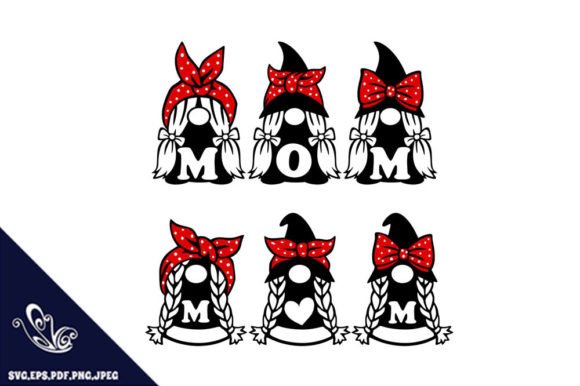
Opening this file, my first impression is one of gentle charm. The gnome theme, especially with the ‘Mom’ element, carries a warm, homespun personality. It’s not overly cartoonish or too detailed; it sits in a sweet middle ground. This visual personality immediately suggests a project meant for connection—a gift, a cherished home item, or a product for a customer who values that handmade, heartfelt touch. The layout feels balanced, with shapes that look straightforward to translate into satin stitch outlines and fill stitch areas. For an embroidery designer, that’s a good starting point: a design that won’t fight you during digitization.
Where This Design Naturally Belongs
In my mind, I’m already placing this on different surfaces. It’s singing to me as a centerpiece on a cozy apron for a kitchen-loving mom, or as a sweet, small motif on the corner of a baby blanket. Imagine it embroidered on a neutral tote bag—it instantly becomes a giftable, boutique-style product. For Etsy sellers or small shop owners, this design has that ‘giftability’ factor. It could elevate a simple pillow cover or a kitchen towel into a special holiday gift. I’m also seeing it work beautifully as a custom apparel detail on a sweatshirt sleeve or as a standalone embroidered patch. Its theme is universal enough for personalized products but specific enough to create immediate recognition.
Thinking Through a Real Project: The Custom Tote Bag
Picture this scenario: a client requests a personalized tote as a Mother’s Day gift. You pull up the Gnome Mom SVG Design. The clean lines mean you can efficiently digitize it, focusing on making the hat and beard textures pop with different stitch types. You choose a soft, heathered cotton for the bag. Here’s where practical judgment kicks in. The design’s size and detail level need to match the hoop size and the fabric texture. On a tote’s potentially heavier fabric, you’d need a good stabilizer to keep those shapes crisp. The result? A product that feels professionally made, not just decorated. That builds customer trust and enhances your brand consistency as a maker.
Performance in the Real World of Stitching
How does this design perform when the machine starts running? The provided multi-format bundle (EPS, SVG, DXF, PNG, PDF) is a strong start for any digital embroidery file workflow. The key for us is how the shapes hold up. Areas like the gnome’s pointed hat or the curved beard require attention to stitch density to prevent puckering on stretchy fabric like t-shirts or on dark fabric where you might use a lot of white thread. For smaller applications—like on a cap with a curved surface—you’d need to test the scaled-down version carefully. Tiny details might get lost if reduced too much.
For commercial embroidery or producing multiple craft fair items, the design’s clarity and straightforward aesthetic mean efficient production. It stitches cleanly, which matters when you’re making fifty baby embroidery items for a boutique. It also lends itself well to printable mockups for your Etsy listings, helping customers visualize the finished product.
Caution Areas: Where to Use Careful Judgment
Every design has its ideal matches and its less-suited applications. For the Gnome Mom SVG Design, I’d proceed cautiously on very textured fabrics like thick boucle or terry cloth, where fine lines could blur. On very thin fabric like a delicate blouse, the stitch density must be light to avoid distortion. If you plan to add text, as mentioned, test those tiny lettering additions thoroughly on scrap first. Also, consider products that need frequent washing, like kids’ apparel; you’d want to ensure the stitch structure is robust enough.
This isn’t a design I’d automatically choose for a very small hoop size project without first checking how the finer elements compress. The decorative accents need space to breathe to maintain their visual appeal.
The Impact on Your Business and Your Client
Using a well-constructed design like this affects more than just the stitch. It influences the perceived product value. A clean, charming embroidered gnome on a sweatshirt looks intentional and professional, increasing its worth in a handmade product market. It enhances buyer engagement because it tells a simple, warm story. For creative entrepreneurs, it becomes a reliable design asset you can use across different craft business items, from holiday embroidery to wedding gifts, building a cohesive look.
Practical Notes from the Worktable
Before you stitch this for a client or a batch of small shop merchandise, here’s my workflow advice. Always test the design on scrap fabric first, using the same material and weight as your final project. Check thread color contrast against your background fabric—play with light and dark fabric backgrounds in your software mockups. Review stitch density in your digitization; you might adjust it for delicate fabrics. Confirm hoop size suitability and inspect small details like the gnome’s features to ensure they’ll be clear.
Crucially, use proper stabilizer for the fabric you choose. And a step many overlook: confirm licensing before selling finished items. The product description mentions it’s a template for various uses, but always verify the specific terms for commercial use of the finished embroidered item or any derived digital product. This protects your craft business.
Lastly, think about design assets holistically. This Gnome Mom SVG Design, as part of the Crafts and Graphics world, is more than a file. It’s a starting point for creating something tactile and meaningful. When you approach it with this practical, real-world mindset, you turn a digital graphic into a thread-and-fabric story that someone will truly love.